List of contents
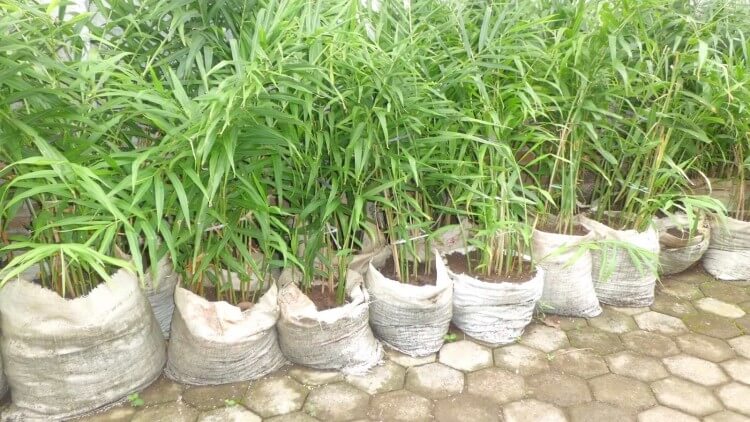
Do you know how to cultivate red ginger in sacks? One of the best ideas if you want to plant red ginger but don’t have any land left is to use a sack.
This method is easy to do, and definitely saves on land and capital use. In addition, the need for red ginger is also relatively high, so it has become a business opportunity in itself.
Although cultivating red ginger in sacks can be done independently, to produce good quality ginger, there are ginger growing requirements that must be met. This is useful so that ginger growth and development is at its maximum point.
Ginger planted in sacks is also easier to control so the potential for disease can be minimized.
With a relatively high selling price, cultivating red ginger in sacks is worth a try. Just follow the steps below to be successful.
Requirements for Red Ginger Seeds that are Suitable for Planting
If you want to produce high quality and abundant red ginger plants, the first thing you have to do is look for superior seeds. Even though the red ginger will be planted in sacks or other containers, the red ginger seeds selected must still be suitable for planting.
For example, if the red ginger seeds chosen are not of good quality, don’t expect the resulting plants to be good either. Unfortunately, many people don’t pay enough attention to this aspect, especially for those who are just starting to grow red ginger independently.
The results were predictable, because the ginger plants did not meet expectations. The requirements for good red ginger seeds are that the rhizome must be fresh and mature enough, approximately 10-12 months. Of course it’s a bit difficult to get red ginger like this.
Actually there is an easy solution. Just go to the provider of red ginger seeds and choose the best type. Once again, whether the results of the red ginger plant will be good or not will be greatly influenced by the quality of the seeds obtained. So you should choose high quality seeds.
Process of Sowing Red Ginger Seeds
After getting super quality ginger seeds, the next step is to sow the seeds. In the process, the red ginger rhizome obtained is then cut.
For information, on every red ginger rhizome there are usually 2-3 shoots which will later grow into plants.
After cutting, dry the rhizomes for two hours under the hot sun. After the drying process is complete, prepare a growth regulator solution and soak the red ginger in it for 30-60 minutes. This is useful for accelerating the shoots so they grow faster.
So that red ginger seeds are safe from disease and pests, ginger rhizomes should be soaked in fungicide liquid. Next, place the seeds in a seeding medium containing a mixture of fertilizer and soil. Don’t cover the top lightly with straw.
Water regularly so that the moisture in the seeding medium is maintained. Let the red seedling ginger shoots grow until they are two weeks old before transplanting. In this process, prepare the sack planting medium which will later be used to grow red ginger seeds.
Red Ginger Planting Process
After two weeks of age, the red ginger will shoot, and that is a sign that it is ready to be transferred to the sack.
One sack can be planted with three red ginger seeds at exactly the same distance. Don’t forget to make a hole in the sack 3 cm deep and then place the ginger in it.
Place the ginger with the bud side facing up, after that cover the hole with but try to thin it so that the bud is still slightly visible.
This is useful so that the oxygen circulation in the planting media remains sufficient so that the nutrients are preserved.
The planting process is then closed by spraying the shoot area. The next task is to observe the growth of the red ginger plant.
For example, if within 30 days after planting the red ginger does not grow, immediately replace it with another healthy seed.
Also pay attention to the red ginger planting medium, if weeds or wild grass appear, clean it immediately so it doesn’t interfere with the growth process.
Caring for red ginger is actually quite easy, for example by weeding regularly to maintain moisture in the planting medium.
Red Ginger Harvest Time
In general, red ginger has entered the harvest period when it is 10 months old. But if you are still unsure whether red ginger is ready to harvest or not, just look to see if the plant’s leaves are starting to dry. If the red ginger stems look dry and yellow, it means the ginger is ready to harvest.
Also Read: How to Handle Post-Harvest Ginger Plants
Because the planting medium for red ginger is in the form of a sack, the harvesting process is definitely not difficult. To take ginger, a tool in the form of a spat can be used.
Another way is to open the sack and then remove the red ginger rhizome. During the removal process, you should be careful so that the rhizome does not break.
After that, the rhizomes can start to be cleaned. To make cleaning easier, dip it repeatedly in water so that the soil stuck to it will come off by itself. If not, spray the rhizomes with low pressure water to avoid damaging them.
As an illustration, one planting medium in the form of a sack usually weighs 50 kg. From this one planting medium, the average red ginger harvest will produce 5 kg. You can imagine if you have lots of sacks, it means you can harvest red ginger every month.
Benefits of Red Ginger
Please note that this plant has a multitude of properties and benefits. The following are the properties and benefits of red ginger for our health:
- Maintain heart health
- Relieves and treats nausea
- Prevents premature aging
- Relieves flu symptoms, fever and coughs
- Smooth blood circulation
- Can treat pain and inflammation
- Helps with the diet process
That’s a brief glimpse of information regarding How to Cultivate Red Ginger in Sacks. Hopefully this can provide useful knowledge.
Also Read: Classification and Morphology of Ginger Plants
All content and articles published on DomainJava.com are provided solely for informational and educational purposes. We strive to present accurate, relevant, and useful information, but it is not intended to violate any laws, policies, or guidelines. Any use of the information contained in the article How to Cultivate Red Ginger in a Sack is entirely the responsibility of the reader.