List of contents
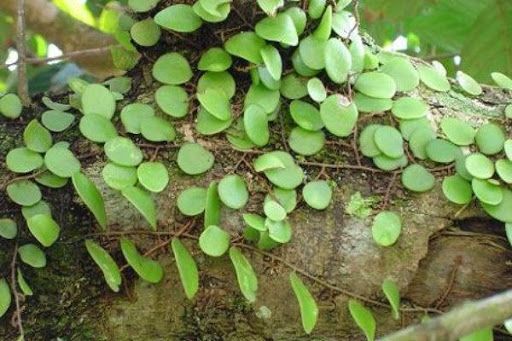
Do you know the Classification and Morphology of Dragon Scale Leaf Plants? Dragon scale leaf plants live on the stems of other plants. In fact, this dragon scale leaf plant grows wild in forests and fields, or perhaps in other places such as places that are quite wet or damp.
This dragon scale leaf plant is one of the plants that has many names. In foreign languages such as Dutch, this plant is known as duitvaren.
The name of this dragon scale leaf has various names in Indonesia, the Sundanese people call this plant the duwitan nail.
So, this time we will review the classification of dragon scale leaf plants along with their morphology. If you are still curious about the classification and morphology of this plant, you can look at the following discussion.
Classification of Dragon Scale Leaf Plants
In general, the classification of dragon scale leaf plants looks unique and quite interesting. If you still don’t believe it, then you can look at the reviews below.
- Kingdom – Plantae
- Sub Kingdom – Tracheobionta
- Division – Pteridophyta
- Class – Pteridopsida
- Sub Class – Polypodites
- Ordo – Polypodiales
- Family – Polypodiaceae
- Genus – Drymoglossum
- Species – Drymoglossum piloselloides (L) Presl.
Morphology of Dragon Scale Leaf Plants
This plant, which has various benefits in curing every disease, has a unique and interesting morphology for you. The morphology of the dragon scale leaf plant includes rhizomes, leaves, roots and spores.
If you want to see a clearer explanation of its morphology, then you can read the review below.
1. Rhizoma
This dragon scale leaf plant is a herbaceous plant that grows climbingly with rhizomes that are about 1 mm long and will stick firmly to the trunk and branches of the tree it is on.
The surface of the rhizoma has scales that have a heart shape, usually covered by fur or hair, which is white when it is still young. So, when it is old, the color will change to brown.
The rhizoma of dragon scale leaves has a fairly hard texture and pseudo-monopidal branching. This means that the main stem will be clearly visible, because the growth process is faster, longer and larger compared to the branches which are only arranged alternately.
2. Leaves
One dragon scale leaf and several other leaves will grow at quite short distances. These dragon scale leaves have short stems, but have quite thick flesh and are accompanied by an elongated oval shape.
Dragon scale leaves are round or blunt at the top and pointed at the base and have a dark green color on the upper surface.
Dragon scale leaves have hair or feathers on the bottom, and have two types, namely sporophyll and trophophyll.
This is usually referred to as plant dimorphism. Sporophyllous leaves usually have a long shape in the form of ribbons and long leaf blades up to 11 cm and stalks measuring up to 12 cm.
These sporophyll-shaped leaves function as a place for the sorus which are located at the bottom, precisely on the surface of the leaf, in very large numbers. This is different from trophophyll leaves which only have a shorter, smaller and rounder shape.
This trophophyll leaf has leaf blades that are up to 3 cm long, and the stalk size can reach around 0.5 to 1 mm.
Apart from that, the bone patterns of the sporophyll and trophophyll dragon scale leaves have very different differences. You should know that these trophophyll-shaped leaves have a mesh or reticulate bone pattern. Meanwhile, the sporophyll-shaped leaves are longitudinal.
This is because there is a parallel bone pattern and can form a curve that follows the width of the leaf, then meets at the tip.
The rhizome seat or habitat on dragon sirik leaves has plants that include two variations. Now, in the first variation or first habitat, there are rhizome leaves which are arranged alternately and accompanied by fairly short distances.
Meanwhile, for the second variation or second habitat, the leaves will be arranged parallel, but the distance between one leaf and another will be further away.
3. Roots
The roots of this scale leaf plant are of the fibrous type, due to their unbranched tube shape, black color and large numbers.
These fibrous roots function to absorb and retain water or water vapor in the environment or surface of the tree.
Conclusion
Dragon scale leaves are a plant that belongs to the Polypodiaceae family with the Latin name Drymoglossum piloselloides (L) Presl. This plant usually lives in forests or fields, and usually lives in areas that are quite humid.
This plant lives by climbing and has rhizomes, these rhizomes are what will attach to the trunk or tree it is on, the texture of these rhizomes is quite hard. These dragon scale leaves have fibrous roots that are unbranched and black in color.
So, this root will become stronger when it is on the host tree. Please note that the leaves of this dragon scale plant have a small diameter and are elongated.
Also Read: Requirements for Growing Dragon Scale Leaf Plants
All content and articles published on DomainJava.com are provided solely for informational and educational purposes. We strive to present accurate, relevant, and useful information, but it is not intended to violate any laws, policies, or guidelines. Any use of the information contained in the article Classification and Morphology of Dragon Scale Leaf Plants is entirely the responsibility of the reader.