List of contents
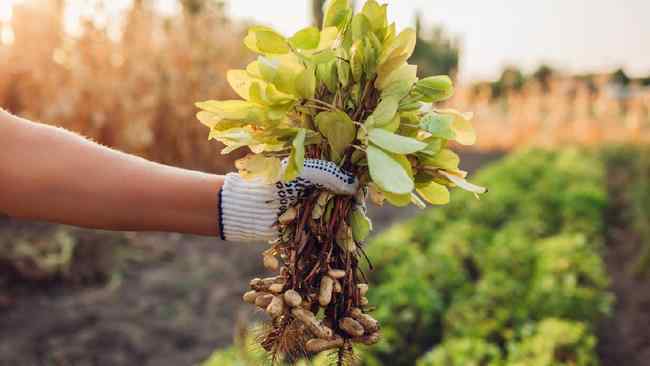
Do you know about the types and methods of controlling pests and diseases of peanut plants? Peanuts or in scientific language known as Arachis Hypogaea L is a plant that is able to grow in tropical and subtropical climates.
According to history, this plant comes from South America or to be precise from Brazil.
Peanuts are a type of legume which is a leading commodity in Indonesia along with soybeans.
In Indonesia, peanut cultivation is usually done to meet industrial needs or also for personal consumption.
As a country that has a tropical climate, the land in Indonesia is very suitable for planting peanuts. In fact, almost all regions in Indonesia allow for peanut cultivation.
This is what then makes Indonesia listed as the third largest peanut producing country in the world.
With a harvest area of 559,000 hectares per year, Indonesia is only behind China and India.
However, with its fertile soil, it is still possible for Indonesia to continue to increase peanut production from year to year. And it is not impossible that Indonesia will become the largest peanut producer in the world.
In Indonesia itself, the region that produces the most peanuts is the province of East Java. Per year, East Java can supply more than 153,000 tons of peanuts. Then followed by Yogyakarta and Central Java in second and third place.
As a type of plant that knows no seasons and has stable market demand, peanut cultivation is very promising from an economic perspective. However, there are still challenges in cultivating peanut plants.
One of the challenges for peanut farmers is attacks from pests and diseases of peanut plants which can occur at any time.
Therefore, it is necessary to understand the various types of pests that can attack peanuts and how to control them.
Types and Methods of Controlling Peanut Plant Pests
Even though they have a simple care system, peanuts are not free from pest attacks.
Various types of pests that often attack peanut plants include:
1. Ear infections
Aphids (Aphids) are pests that often attack tropical climate plants, including peanuts.
This type of flea that consumes plant sap usually attacks peanut plants during the growth period until just before harvest.
This one pest often targets young plant shoots. The result of this attack is that plant growth is stunted until it becomes stunted.
Apart from attacking plants, Aphids can also be insects that transmit various types of legume diseases.
As a control measure, Aphid infestations can be controlled by spraying with insecticide.
Spraying can be done when peanut plants are 25% infected. It is recommended to spray using organic pesticides first. However, if it doesn’t work, it can be replaced with a normal dose of chemical insecticide.
2. Armyworm
This pest is a very disturbing enemy for peanut farmers because it can attack quickly.
Armyworm or in its scientific name is known as Spodoptera frugiperda is a native moth insect that originally came from South America.
Armyworms usually eat the leaves of peanut plants, leaving only the leaf bones behind.
However, adult larvae usually attack the veins of the leaves, causing holes in the plant.
The way to deal with fall armyworms is to plant peanut seeds simultaneously with regular monitoring.
However, if it has already been attacked on a large enough scale, it can be treated by spraying with pesticides.
3. Leafminer
This third type of pest often attacks legume plants. This small insect called Aproerema Modicela is usually found in the folds of peanut leaves.
The larvae of this pest usually attack directly on the inside of the leaves by scraping or scraping them between the upper and lower epidermis.
The characteristic caused by the attack of the leaf borer is a change in the color of the leaves of the peanut plant to brown. For a large-scale attack, the leaves will turn black as if burnt.
Efforts to control this pest are by carrying out routine checks on plants and spraying insecticides systematically.
4. Hama Clock
Unlike the previous pests, this Uret Pest attacks from underground so its presence is difficult to detect.
Uret pests can usually only be detected when peanut plants experience poor growth.
Uret pests attack peanuts by eating the roots, thereby hampering the development of peanuts. A further consequence of peanut pests is the death or wilting of peanuts.
The way to determine whether peanuts are infected with snakebite or not is to dismantle the soil around the root area.
Efforts to control this ureth pest attack are with biological agents using the fungus Metharizium sp.
Meanwhile, as a preventive measure, you can soak the seeds using seed treatment pesticides.
Types and Methods of Controlling Peanut Plant Diseases
Apart from pests, peanut plants can also be attacked by various diseases. Various types of diseases that commonly attack peanut plants include:
1. Rust Disease
This disease attacks the leaves. The result of this disease attack is the appearance of brownish spots.
Meanwhile, large-scale attacks can cause leaf loss.
This disease usually occurs because it is caused by the fungi Phakopsora pachyrhizi and Uromyces arachidae.
Efforts to control if peanut plants are attacked by rust disease are by sanitizing the land, cleaning weeds and infected plants.
To minimize the attack of this disease is to use superior varieties. or you can also spray using fungicide.
2. Sclerotium disease
This disease often attacks legume plants (Soybeans, Peanuts, Green Beans). This type of sclerotium disease is caused by infection with various microbes such as fungi, bacteria and viruses.
Humid land conditions trigger the emergence of Sclerotium rolfsii which is the cause of this Scletorium disease. In the process, this fungus releases toxins that cause damage to plant cells.
This disease usually attacks the base of the stem and soft parts of the plant. Symptoms that appear due to sclerotium disease are the appearance of black spots
Controlling this disease is by making improvements to the irrigation system so that water can flow perfectly.
3. Anthracnose
The characteristic that can be recognized from anthracnose attacks is the occurrence of rot on the stems and leaf stalks. Symptoms include the appearance of brownish spots.
Infection with this disease is caused by the fungus Colletotrichum truncatum which mostly attacks during the flowering or pod filling phase. This infection can spread through wind or rain.
Control and prevention of this anthracnose disease can be done by spacing the plants slightly apart so that the fungus does not spread easily.
In more severe phases it is necessary to spray using fungicide.
4. Bacterial Wilt
This disease is caused by a bacteria called Ralstonia solanacearum. This bacteria can attack more than 200 types of host plants.
Infections that occur due to this disease can pass through the soil with the initial symptoms being that the plant suddenly wilts quickly.
Plants that wither will then experience rot. The bacteria from this wilt disease grow in moist soil conditions.
Control of this wilt disease is by using a crop rotation system and spraying using Streptomycin or Agrimycin.
Thus the discussion regarding Types and Methods of Controlling Pests and Diseases of Peanut Plants. Hopefully it can be useful.
All content and articles published on DomainJava.com are provided solely for informational and educational purposes. We strive to present accurate, relevant, and useful information, but it is not intended to violate any laws, policies, or guidelines. Any use of the information contained in the article Types and Methods of Controlling Pests and Diseases of Peanut Plants is entirely the responsibility of the reader.